

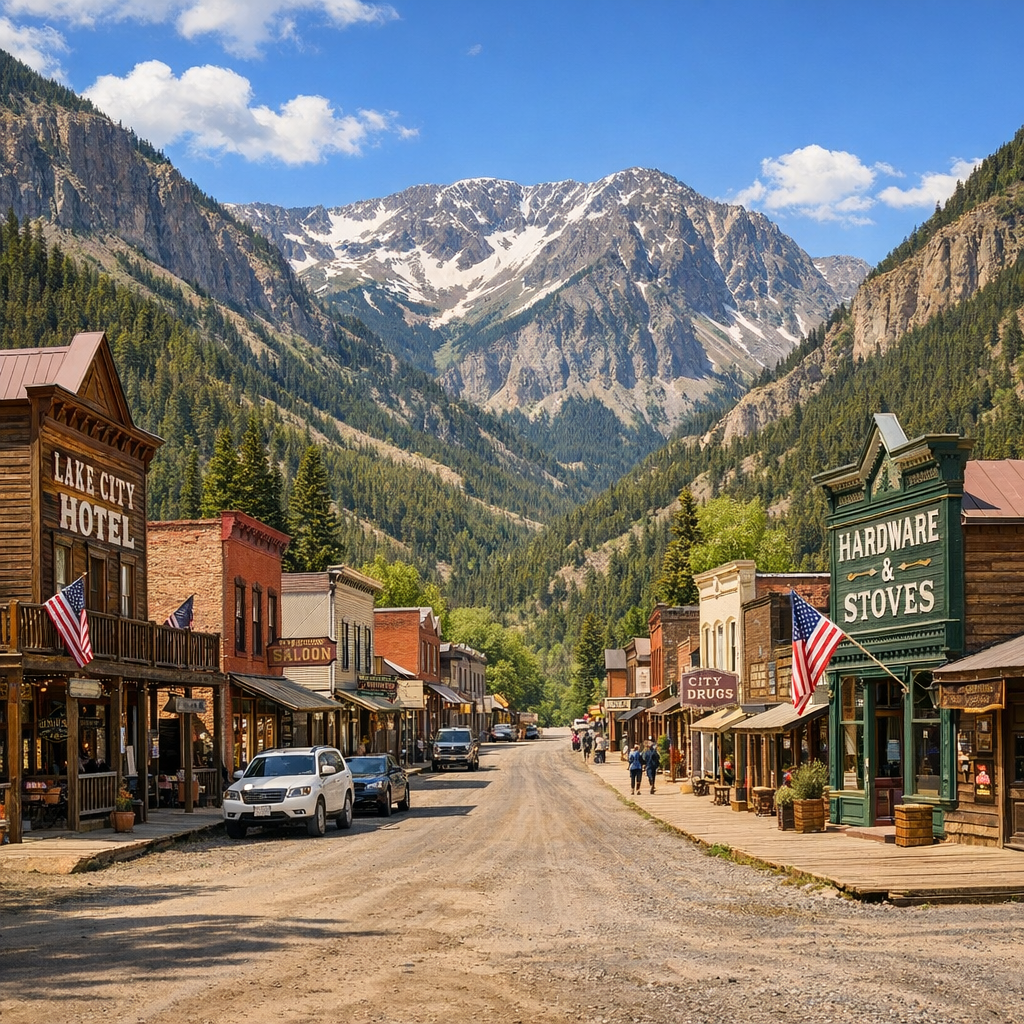
Lake City, Colorado, nestled in the San Juan Mountains, has undergone significant economic transformations since its founding. Initially established as a mining hub in the late 19th century, the town experienced rapid growth due to abundant mineral deposits. However, by 1905, the mining era had concluded, leading to a prolonged economic decline.
In response, Lake City shifted its focus towards tourism. The town’s well-preserved historic architecture and natural beauty attracted visitors seeking outdoor recreation and a glimpse into Colorado’s past. This transition was facilitated by the completion of the Denver & Rio Grande Railroad in 1889, which improved accessibility and encouraged tourism.
Today, Lake City’s economy is predominantly driven by tourism. The town offers a range of activities, including hiking, fishing, and exploring historic sites. Events like the Uncorked Wine & Music Festival further enhance its appeal. Organizations such as Lake City DIRT (Downtown Improvement and Revitalization Team) play a crucial role in supporting local businesses and promoting economic vitality. Their initiatives include hosting markets for handcrafted goods and providing revolving loans to local enterprises.
Despite its small population—projected at 403 residents in 2025—Lake City maintains a median household income of $62,422, reflecting a stable economic environment. The housing market also shows resilience, with a median home sale price of $749,000 and a 9.02% year-over-year increase, indicating sustained demand.
Lake City’s journey from a mining town to a tourism destination exemplifies adaptability and resilience. By preserving its historical heritage and embracing new economic opportunities, the town continues to thrive while honoring its rich past.